USB is often touted as the ultimate "Plug and Play" interface, but behind that simple connector lies a complex hierarchy of host controllers and drivers. If your high-speed drive feels sluggish, the problem is likely in how your OS is talking to the USB controller.
Host Controller Architectures: xHCI vs. EHCI
The performance of your USB ports is determined by the Host Controller Interface (HCI) driver. Understanding the difference between these standards is key to troubleshooting speed issues.
- EHCI (Enhanced Host Controller Interface): The standard for USB 2.0. It supports speeds up to 480 Mbps. Most modern PCs still have EHCI controllers for legacy support of keyboards and mice.
- xHCI (eXtensible Host Controller Interface): The modern standard for USB 3.0, 3.1, 3.2, and USB4. It is designed to be much more efficient, supporting speeds from 5 Gbps to 40 Gbps and beyond.
Why Your 3.0 Port is Running at 2.0 Speeds
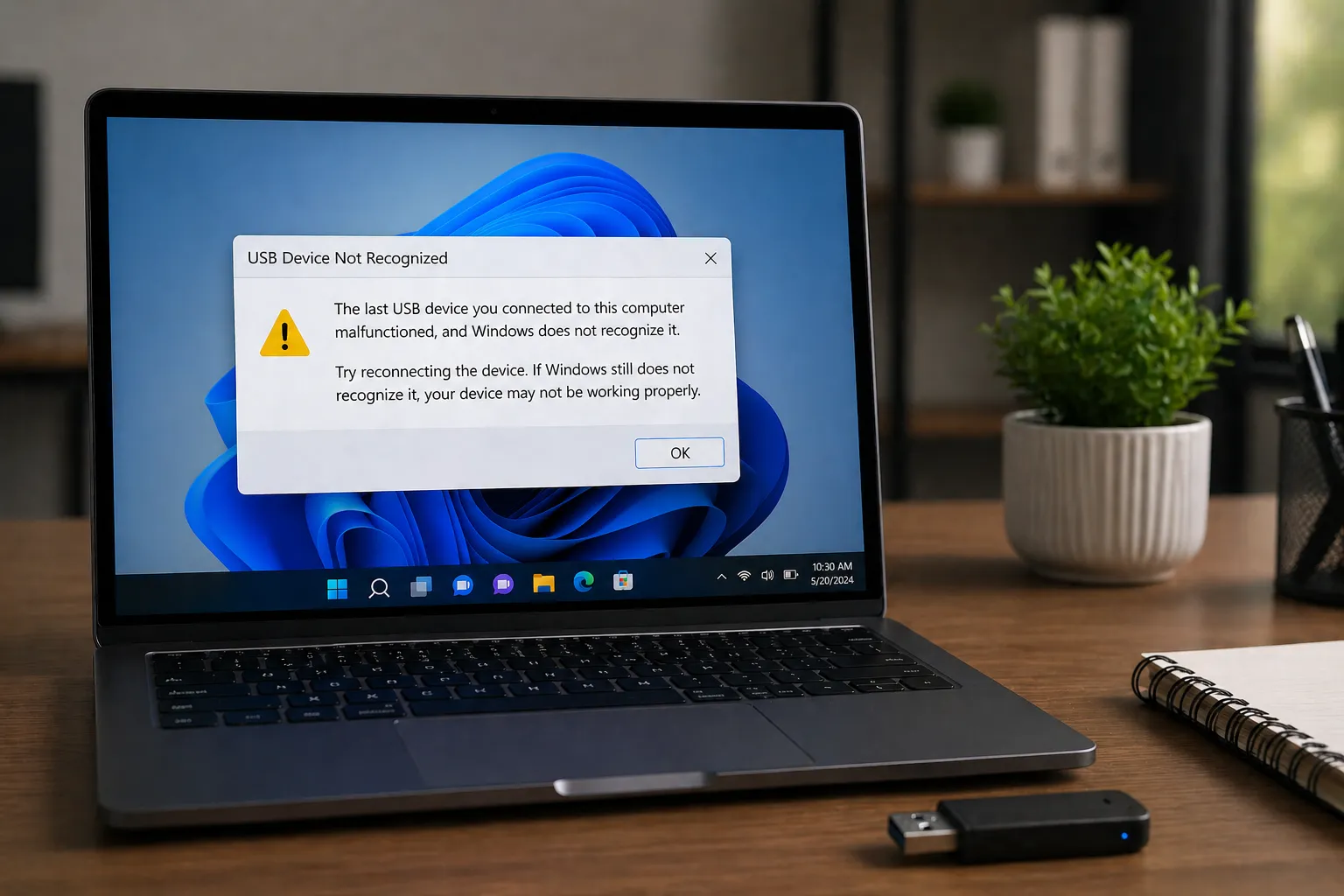
It is a common frustration: you plug a USB 3.0 drive into a blue port, but Windows warns you that the "device can perform faster." This usually happens because of a driver "handshake" failure.
USB-C Power Delivery (PD)
USB-C isn't just about data; it's about power. A specialized "PD Controller" driver manages the negotiation between your charger and your laptop. They "talk" over a configuration channel (CC) wire to decide if the port should provide 5V, 9V, 15V, or 20V.
Conclusion
USB performance is a delicate balance of controller hardware and driver efficiency. By ensuring your xHCI drivers are up to date and understanding the power-negotiation roles of USB-C, you can ensure your peripherals operate at their maximum rated speeds.